Polishing Brushes
Product Details
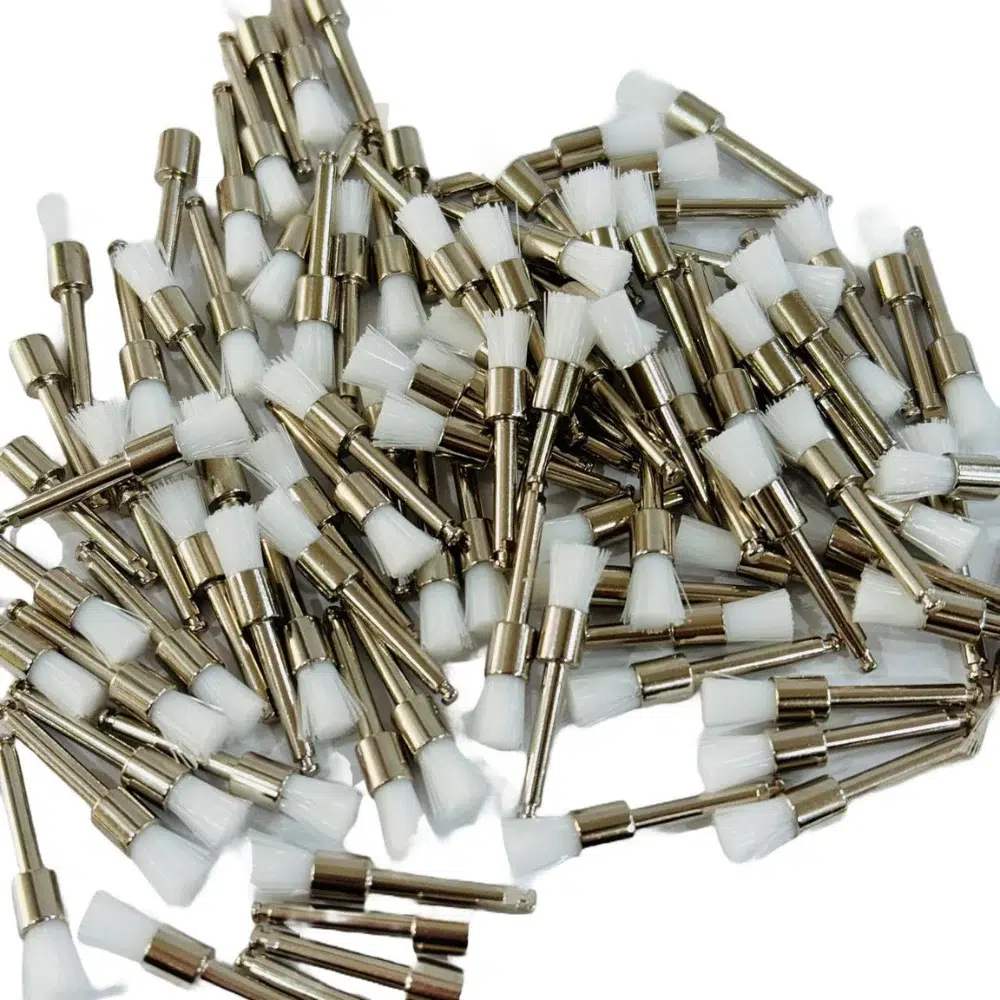
Product Name: Polishing Brush
Usage: Dental Area
Application: Hospitals & Dental Clinics
Function: Dental Polishing & Oral Care
Weight: 10 g
Type: Flat & Conical Polishing Brushes
Available Variants Flat Multi Colour Conical White Conical Multi Colour Flat White
In stock · 100 available · SKU BIOS-0218
Actual product may differ slightly from the picture due to market availability.
Description
Polishing Brushes are precision rotary tools designed to deliver a smooth, clean finish on dental surfaces and restorations. By employing controlled movement, these brushes refine composite fillings, tooth enamel, and prosthetic materials after restorative procedures.
With varied brush shapes and filament styles, Polishing Brushes enable clinicians to reach both broad and confined areas while maintaining superior surface integrity. Their versatility supports routine polishing tasks in everyday dental practice, improving patient outcomes and practitioner satisfaction.
Key Features
- Rotary brush construction offers consistent, high‑speed polishing action.
- Flat brush head variant provides expansive contact for broad surfaces such as crowns or veneers.
- Conical brush head variant grants access to grooves, fissures and orthodontic bracket depressions.
- Multiple filament styles allow adjustment of stiffness and abrasiveness for specific materials.
- Brush geometry optimizes contact angle, reducing tugging on delicate restorations.
- Durable polymer filament resists wear during extended use on composite and metal‑based substrates.
- Compatible with a wide range of polishing pastes and abrasive compounds.
- Easy, ergonomic grip designed for prolonged clinical sessions.
- Compartmentalized design reduces contamination when switching between applications.
- Standardized barrel diameter (3 mm) allows integration with popular handpiece systems.
Clinical Uses
- Finishing and polishing composite resin restorations after layered curing.
- Refining surface of tooth enamel following restorative procedures.
- Enhancing surface finish on ceramic or metal‑ceramic prostheses.
- Cleaning fissure and groove fillings to prepare for secondary caries prevention.
- Polishing occlusal surfaces of permanent and temporary crowns for a smooth bite.
- Adjusting surface texture of orthodontic bonding sites.
- Final stage of polishing preparations before plaque‑control brush placement.
- Cleaning subgingival surfaces not routinely accessible by hand instruments.
Why Dental Professionals Choose Polishing Brushes
- Consistent uniformity achieved by rotary motion reduces operator variability.
- Shape‑specific designs tailor surface contact for both wide and restricted areas.
- Filament density selectable for delicate versus heavily abrasive tasks.
- Integration with existing polishing pastes simplifies workflow and inventory.
- Reduced hand fatigue thanks to ergonomic barrel and balanced weight.
- Long‑lasting filaments meaning fewer replacements during high‑volume practice.
- Compliance with recommended speed settings maximizes finish quality.
Who Should Buy Polishing Brushes?
- Dental clinics performing routine restorative and cosmetic procedures.
- Dental laboratories preparing and finishing resin composite and prosthetic prototypes.
- Orthodontic practices refining bonding sites and bracket foundations.
- Hospitals and dental hospitals requiring bulk purchasing for institutional use.
- Medical suppliers specializing in premium dental instrumentation hardware.
Product Specifications
- Diameter: 3 mm – optimal for standard handpiece adapters.
- Brush tip length: 120 mm – customizable to accommodate various handpiece designs.
- Filament material: high‑grade polymer with engineered abrasiveness.
- Brush head shapes: flat and conical varieties available.
- Weight: approximately 45 grams per brush unit.
- Recommended operating speed: 14,000–15,000 rpm for maximum finish efficiency.
- Compatible polishing agents: silicone‑based pastes, gold‑filled abrasives, and resin‑compatible compounds.
- Packaging: 10‑piece sets per carton for bulk distribution.